
It is disheartening to see the phenomenon of hate embraced by so many people who don't understand the origin, meaning, or impact. To grasp the significance, you must first understand what it means. It is an intense, deep-seated emotional response of strong dislike,...
MAJOR BEN’S ARTICLES
Below is a list of articles by Major Ben Brooks that have appeared in the Times Herald.
Daddy, What Time Will You Be Home Tonight?
Every family member asks this question daily. I wonder how many leaders realize the gravity of that question for their officers. When they get up in the morning, they have quiet time with their family before embarking on, hopefully, another routine day at the office....
Leaks
A leak is an unintended hole, crack, or fault that allows a substance- such as a liquid, gas, or light- to escape or enter a container or system. As a child growing up in the rural South, I watched my father build his own home. At that time, he installed a tin roof....
Masks and Officer Safety
As a career law enforcement officer, I am perplexed by the recent debate over officers wearing masks. Everything I learned about law enforcement involved honesty, integrity, and, most of all, transparency. The federal government has a duty to present law enforcement...
Bias Understood
As an international speaker, trainer, and consultant, I have been intrigued by the lack of understanding of various terms, with people using them without knowing their meanings or applications. At one of my National Speakers Association conferences, a presenter shared...
Fear and Bias as a Law Enforcement Blind Spot
Fear – an unpleasant feeling triggered by the perception of danger real or imagined. Origin - past experiences (0-6) History - nomadic days (fight or flight) Survival function - to protect us, triggered by a significant event, i.e., hot, cold, wet, trauma Source: New...
DEI America’s Biggest Blind Spot
In 2016, I took a course with AARP in defensive driving. Having been driving since I was sixteen, I was curious about what the instructor could teach me. I signed up for the course to get a discount on my car insurance. As the instructor went through his orientation,...
DEI, The Latest Bogeyman
DEI is the latest catchphrase that is the catalyst for the present state of the divided states of America. We raise and salute the flag as we recite the Pledge of Allegiance to the United States of America. As patriotic as that sounds, it is far from our day-to-day...
The Reality of Community Policing
Many police executives approached community-oriented policing with a great deal of skepticism because they didn’t realize the critical role that the community plays in their success. Many felt they could do it on their own. Dr. Lee Brown, a former police commissioner...
A Practical Approach to Addressing School Shootings
After Columbine, over four hundred school shootings were reported in America. Every citizen should be outraged that our society has allowed that to happen. Schools should be the safest place in our community for our students, staff, and teachers. It is challenging to...
A Picture Is Worth A Thousand Words
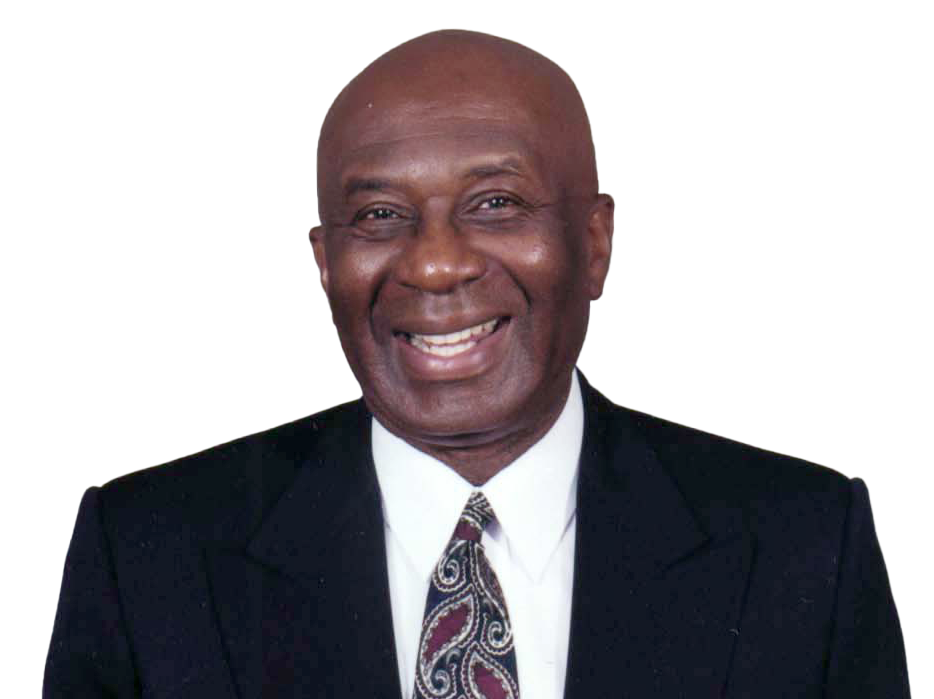
By Major Ben Brooks
Like many Americans, when I was awakened by the news that George Floyd had died as result of a police encounter, I was mortified. In that instance, the pictures were worth more than a thousand words. To see a police officer with his knee on the neck of a person who is handcuffed with his hands behind his back was jaw dropping. Even more disturbing was watching his fellow officers standby, as though they were observing a parade. It was gratifying to see the speed with which the mayor addressed the national audience, by insisting that the officer be arrested. While that is great consolation for the family of Mr. Floyd, I hope the indignation does not stop there. It is imperative that the fervor behind the mayor’s outrage must translate into an after- action report on how this critical issue of the use of force is going to be addressed for his department moving forward.
As a career law enforcement officer, consultant, and trainer, it was appalling to witness such a display of excessive force, which is anathema to proper police procedure. From a leadership perspective, one has to ask the question, “where did they go wrong?” In an attempt to answer that question, it is important to be aware of three overarching leadership principles: the first is JOB. Knowing the job extraordinarily well so there can be no doubt about your ability to respond as opposed to react. The second is, ISSUE. Knowing what the issues are and being able to properly address them. For example, in this instance the issue was employing proper police procedures without deviation. At the same time understanding the humanity about the actions being taken. The third is PROCESS. The process is always consistent and it never fails. For example: when an officer enters the Academy, they are taught all the rules, regulations, and procedures. They are drilled on a continuing basis to ensure that these issues are inculcated into the psyche and personality of the officers. This means that whenever there is an encounter, they automatically know what to do, and perform at the optimum level. When these measures are in place, the outcome will always be very favorable to the police officer and the public.
Whenever there is deviation, what was witnessed in Minneapolis will always be the result. All subsequent actions will be driven by the process i.e. citizens’ complaints, lawsuits, and adverse police actions. A clear understanding of the process will mitigate adverse actions against law enforcement.
Across the country, many law enforcement officials have touted their efforts in addressing unconscious bias in police actions. Obviously, some individuals are not getting the message, or they don’t seem to care. It is important to understand the nature of bias and how it impacts the day-to-day operation of the officer on the street. It is disheartening when I hear people who claim that they have no biases. Obviously, that is a critical component in understanding the philosophy of bias. Psychologist Joseph Ledoux says that bias is a danger meter. It is as much a part of us as our personality.
In my police training, particularly, there is a strong articulation of bias and its impact on the public. There is bias of fear, trepidation, and dehumanization. Conversely, there is bias of comfort, acceptance, and humanization. The pictures that were displayed in Minneapolis were clearly an instance of bias of fear, trepidation and dehumanization.
To illustrate more succinctly, let’s examine two very prominent cases involving police action were the two philosophies were present. The first one involves Walter Scott, a black man, unarmed, who was stopped by the police for a minor traffic violation. When he was approached by the officer, Walter Scott, for whatever reason, decided to run. As he was running away, the officer shot him in the back, killing him. That was a case of fear, trepidation, and dehumanization because he was gunned down like an animal.
The second incident involved young Dylan Roof who went into a house of worship, shot and killed nine people. After the incident, there was an all-points bulletin broadcast for his arrest. The broadcast reported that he was armed and extremely dangerous. However, when he was finally arrested, it was without incident. Many will say that it was good police work, and I will agree. However, what was the big difference in handling this case where the person was heavily armed, and a mass murderer, compared to Walter Scott, who was unarmed and a minor traffic violator.? Why wasn’t the same dehumanizing response accorded Dylan roof? The unconscious bias was very much on display in both instances. The big difference is the trick that our minds play on us when our cultural programming kicks in during times of high tension and uncertainty. Unconsciously, the case of Dylan roof, the mass murderer, showed a level of comfort, acceptance and humanization in the process.
If law enforcement is to get a handle on curbing further tragic incidents of this nature, it is incumbent upon them to ensure that there is realistic training and education on the impact of unconscious bias in police actions. Recognizing our biases is not a sign of weakness. It is a sign of the reality of what we face every single day. Every police officer, when he or she leaves home in the morning, has a great expectation of returning. In order for this to be a reality, they have to be aware that their return is largely dependent upon what they do and what they say during the course of duty. While it is true that many in the public oftentimes are out-of-control. Having sufficient training, education, and awareness prepares officers for this type of encounter. Verbal Judo is a tried and true philosophy.
Whatever I am conducting police trainings, I preface the session with the two basic concepts: re-action versus response. I explained that we react when we don’t know what to do. We respond when we have full knowledge of what to do. I have them to imagine that their two-year-old child falls into a pool and they cannot swim, as a parent what you likely to do? The answers usually are we would probably drown. Which is the correct response. That is what reaction is about. However, when we understand CPR and first aid and how to swim, there is no problem because the response is automatic.
In life each of us come to our profession with a toolbox, not actually, but perceptually. In that box are all of the tools that we have needed to do our jobs as effectively or efficiently as we have done to date. In our sessions, the Idea is to add to the toolbox. Abraham Maslow once said, “if the only tool you have is a hammer then everything will look like a nail.” The purpose of realistic training and education is to always be able to respond as opposed to reacting.
Law enforcement can do itself the biggest favor by ensuring that all officers are fully trained and educated on the realistic implications of the impact of unconscious bias on the everyday interactions with the community. When there is assurance that these measures have been realistically addressed, all subsequent pictures will present the kind of image where the thousands who gather in the street will be for congratulations instead of protestations.