
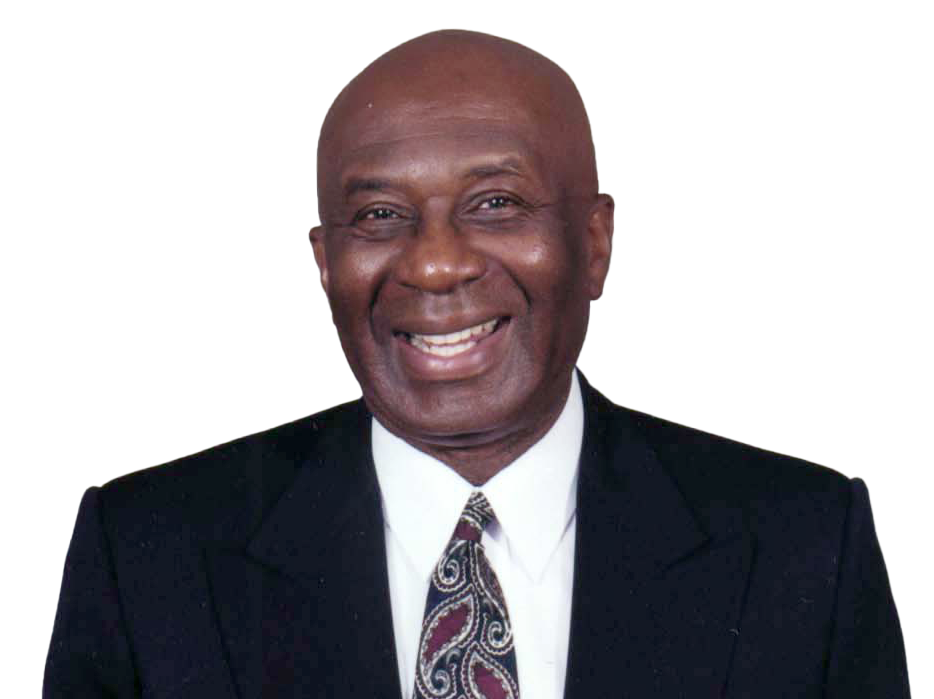
It is disheartening to see the phenomenon of hate embraced by so many people who don't understand the origin, meaning, or impact. To grasp the significance, you must first understand what it means. It is an intense, deep-seated emotional response of strong dislike,...
MAJOR BEN’S ARTICLES
Below is a list of articles by Major Ben Brooks that have appeared in the Times Herald.
Daddy, What Time Will You Be Home Tonight?
Every family member asks this question daily. I wonder how many leaders realize the gravity of that question for their officers. When they get up in the morning, they have quiet time with their family before embarking on, hopefully, another routine day at the office....
Leaks
A leak is an unintended hole, crack, or fault that allows a substance- such as a liquid, gas, or light- to escape or enter a container or system. As a child growing up in the rural South, I watched my father build his own home. At that time, he installed a tin roof....
Masks and Officer Safety
As a career law enforcement officer, I am perplexed by the recent debate over officers wearing masks. Everything I learned about law enforcement involved honesty, integrity, and, most of all, transparency. The federal government has a duty to present law enforcement...
Bias Understood
As an international speaker, trainer, and consultant, I have been intrigued by the lack of understanding of various terms, with people using them without knowing their meanings or applications. At one of my National Speakers Association conferences, a presenter shared...
Fear and Bias as a Law Enforcement Blind Spot
Fear – an unpleasant feeling triggered by the perception of danger real or imagined. Origin - past experiences (0-6) History - nomadic days (fight or flight) Survival function - to protect us, triggered by a significant event, i.e., hot, cold, wet, trauma Source: New...
DEI America’s Biggest Blind Spot
In 2016, I took a course with AARP in defensive driving. Having been driving since I was sixteen, I was curious about what the instructor could teach me. I signed up for the course to get a discount on my car insurance. As the instructor went through his orientation,...
DEI, The Latest Bogeyman
DEI is the latest catchphrase that is the catalyst for the present state of the divided states of America. We raise and salute the flag as we recite the Pledge of Allegiance to the United States of America. As patriotic as that sounds, it is far from our day-to-day...
The Reality of Community Policing
Many police executives approached community-oriented policing with a great deal of skepticism because they didn’t realize the critical role that the community plays in their success. Many felt they could do it on their own. Dr. Lee Brown, a former police commissioner...
A Practical Approach to Addressing School Shootings
After Columbine, over four hundred school shootings were reported in America. Every citizen should be outraged that our society has allowed that to happen. Schools should be the safest place in our community for our students, staff, and teachers. It is challenging to...
Affirmative Action Has Always Been About Race
By Major Ben Brooks
I examined the context of the Supreme Court ruling on affirmative action, and I was mortified by how out of step the nine justices were in their majority opinion. It was equally perplexing to realize that the University of North Carolina was one of the main plaintiffs. As a young African-American growing up in North Carolina before nineteen fifty-four, it was clear that the University of North Carolina was not on my radar as a black student.
Following the court decision of Brown V Board of Education, the racial exclusion was lifted in nineteen fifty-five only after it was ordered by the federal courts. Before that decision, most black students, particularly in North Carolina were only familiar with HBCUs. We all knew that our exclusion was not based on academics.
In nineteen fifty-five Henry Frye was the first African-American student to enroll in the university, and he completed all three years of study at the school of law, graduating in nineteen fifty-nine. He was later named the first African-American Chief Justice of the North Carolina Supreme Court. He was a classic example of someone who dispel the myth of a lack of academic prowess.
For the court to entertain the colorblind philosophy of affirmative action is to disregard the role that race played since the founding of this country. Affirmative action was not a new concept in American history. It only became an issue when there was an emphasis on the inclusion of those individuals we hereto for were systematically excluded. This is borne out by Ira Katznelson whose book, when affirmative action was white, illustrates that point. He makes reference to the G.I. Bill which emphasized white veterans only. Even though the government intended the bill to be inclusive, the administration by white authorities systematically excluded African-Americans.
Michael Jordan, arguably, one of the best basketball players of all time, attended the University of North Carolina in nineteen eighty-one. The University gained a great deal of fame and fortune from someone who before nineteen fifty-four would not be able to grace the halls of that university. I’m reminded of another stellar African-American athlete, Sam Jones of the Boston Celtics who was a scholar-athlete in baseball and basketball. His only choice was an HBCU.
Justice Katenji Jackson in her dissent in the affirmative action case carefully articulated why the majority was incorrect in their summation. It is noteworthy that race and gender played a significant part in her elevation to the highest court in the land. She is arguably the most versed in the laws and their application because of her varied experience in all aspects of the law. As a result, she has brought to the court a different perspective of race sex, and cultural realism. Her ascension to the highest court was not devoid of colorblindness.
Consequently, the majority opinions could benefit from the perspective of Justice Jackson and the other dissenting members whose opinions reflect the philosophy of most of the country.