
It is disheartening to see the phenomenon of hate embraced by so many people who don't understand the origin, meaning, or impact. To grasp the significance, you must first understand what it means. It is an intense, deep-seated emotional response of strong dislike,...
MAJOR BEN’S ARTICLES
Below is a list of articles by Major Ben Brooks that have appeared in the Times Herald.
Daddy, What Time Will You Be Home Tonight?
Every family member asks this question daily. I wonder how many leaders realize the gravity of that question for their officers. When they get up in the morning, they have quiet time with their family before embarking on, hopefully, another routine day at the office....
Leaks
A leak is an unintended hole, crack, or fault that allows a substance- such as a liquid, gas, or light- to escape or enter a container or system. As a child growing up in the rural South, I watched my father build his own home. At that time, he installed a tin roof....
Masks and Officer Safety
As a career law enforcement officer, I am perplexed by the recent debate over officers wearing masks. Everything I learned about law enforcement involved honesty, integrity, and, most of all, transparency. The federal government has a duty to present law enforcement...
Fear and Bias as a Law Enforcement Blind Spot
Fear – an unpleasant feeling triggered by the perception of danger real or imagined. Origin - past experiences (0-6) History - nomadic days (fight or flight) Survival function - to protect us, triggered by a significant event, i.e., hot, cold, wet, trauma Source: New...
DEI America’s Biggest Blind Spot
In 2016, I took a course with AARP in defensive driving. Having been driving since I was sixteen, I was curious about what the instructor could teach me. I signed up for the course to get a discount on my car insurance. As the instructor went through his orientation,...
DEI, The Latest Bogeyman
DEI is the latest catchphrase that is the catalyst for the present state of the divided states of America. We raise and salute the flag as we recite the Pledge of Allegiance to the United States of America. As patriotic as that sounds, it is far from our day-to-day...
The Reality of Community Policing
Many police executives approached community-oriented policing with a great deal of skepticism because they didn’t realize the critical role that the community plays in their success. Many felt they could do it on their own. Dr. Lee Brown, a former police commissioner...
A Practical Approach to Addressing School Shootings
After Columbine, over four hundred school shootings were reported in America. Every citizen should be outraged that our society has allowed that to happen. Schools should be the safest place in our community for our students, staff, and teachers. It is challenging to...
A Nation Of Cowards
Former Atty. Gen. Eric Holder once said that America is a nation of cowards and he received a great deal of pushback for his statement. As I listened to his pronouncement, I wondered what was the concern about his statement. America has always had an issue with...
Bias Understood
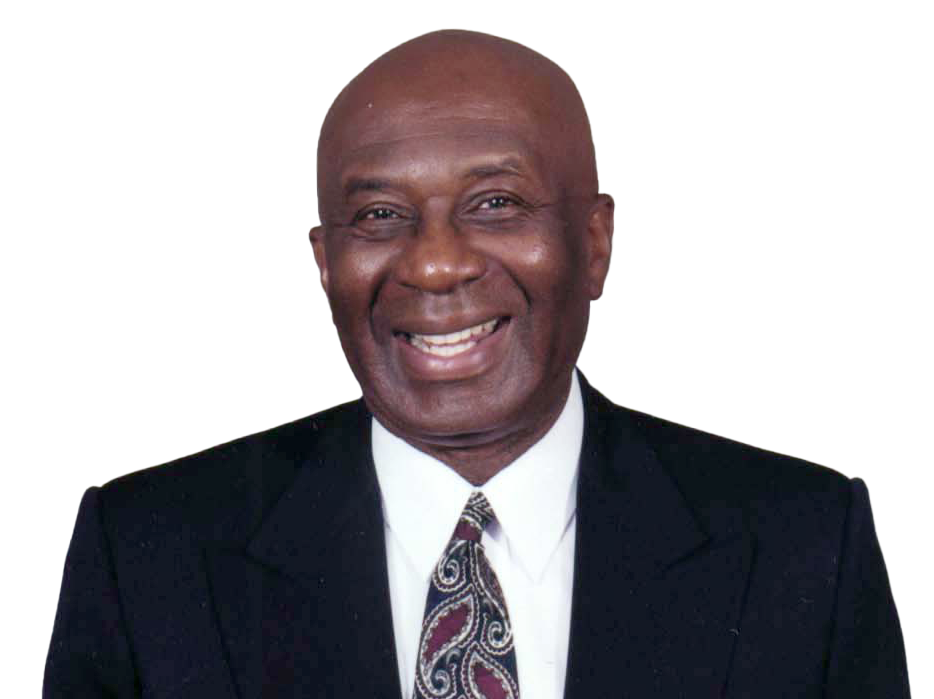
By Major Ben Brooks
As an international speaker, trainer, and consultant, I have been intrigued by the lack of understanding of various terms, with people using them without knowing their meanings or applications. At one of my National Speakers Association conferences, a presenter shared a story about a speaker who had an engagement with an organization. As is customary, the organizers asked, ” What equipment do you need? The particular speaker articulated his needs, including a podium.
When he arrived at the venue, he walked onto the bare stage. He berated the organizer for not having the podium he requested. The organizer realized that the speaker misunderstood the nature of the equipment he requested. The organizer informed him that what he really wanted was a lectern placed on the podium. At that moment, he learned that the word podium stems from the ancient Greek word podion, meaning “little foot” or “base.” It evolved into the Latin word podium, which originally referred to a raised platform surrounding an ancient Roman arena.
The lesson I learned from that presentation was that when you use a word or concept, you need to understand its meaning and application. Like a podium, bias is one of the most misunderstood concepts among clueless individuals. Too many people view bias as a negative trait they don’t want to be associated with. It is important to set the record straight to understand the true meaning and implementation of the term.
Defining the term is the first step toward developing an understanding. It is a preference for or against something or someone based on performance or behavior. Based on these concepts, we develop a story based on fear or trust. Whichever one you choose dictates the individual’s behavior. Every experience one has during their life creates a bias based on the aforementioned concepts. To understand this is to see bias in a different light, not as something negative, but as real life.
As a young man growing up in North Carolina, I worked on many farms during the summer months, particularly tobacco harvesting. Various farmers came to the community for day laborers. When I arrived at the worksite, I realized that I was the only one who looked like me. I was terrified to the degree that I couldn’t eat, and I was extremely uncomfortable. It was the first time that I had been in the company of all people who didn’t look like me.
Looking back, I realize that my first encounter with bias was fear. No one said anything unkind or hurtful. I realize the experience was the result of a bias I harbored. connected with fear. In our area, there was a presence of the Ku Klux Klan. Our Parents told us stories of how, when we walked along the highway, always facing traffic, particularly at night, they instructed us to walk in the ditch cause many of those individuals driving down the road had long sticks stuck out the window, which would catch you under the chin and drag you down the road.
I recognize that that experience was a precursor to the rest of my life. When I look back on that incident, I recognize that I approached this group with a preconceived notion: my story. At that moment, it was not about the crowd; it was about me. When I realized the behavior, I observed did not match the story I had in my head, I changed my story. That forced me to change my mind about people who were different from me.
The takeaway is to remember that every experience we have creates a bias, based on performance or behavior, that manifests as fear or trust. Whichever one predominates controls your behavior. If the behavior, performance, or observation does not fit your story, it’s important to make the seismic shift to the truth. Bias is how we have lived, which impacts our behavior. Make sure you understand the words and concepts you use.