
It is disheartening to see the phenomenon of hate embraced by so many people who don't understand the origin, meaning, or impact. To grasp the significance, you must first understand what it means. It is an intense, deep-seated emotional response of strong dislike,...
MAJOR BEN’S ARTICLES
Below is a list of articles by Major Ben Brooks that have appeared in the Times Herald.
Daddy, What Time Will You Be Home Tonight?
Every family member asks this question daily. I wonder how many leaders realize the gravity of that question for their officers. When they get up in the morning, they have quiet time with their family before embarking on, hopefully, another routine day at the office....
Leaks
A leak is an unintended hole, crack, or fault that allows a substance- such as a liquid, gas, or light- to escape or enter a container or system. As a child growing up in the rural South, I watched my father build his own home. At that time, he installed a tin roof....
Masks and Officer Safety
As a career law enforcement officer, I am perplexed by the recent debate over officers wearing masks. Everything I learned about law enforcement involved honesty, integrity, and, most of all, transparency. The federal government has a duty to present law enforcement...
Bias Understood
As an international speaker, trainer, and consultant, I have been intrigued by the lack of understanding of various terms, with people using them without knowing their meanings or applications. At one of my National Speakers Association conferences, a presenter shared...
Fear and Bias as a Law Enforcement Blind Spot
Fear – an unpleasant feeling triggered by the perception of danger real or imagined. Origin - past experiences (0-6) History - nomadic days (fight or flight) Survival function - to protect us, triggered by a significant event, i.e., hot, cold, wet, trauma Source: New...
DEI America’s Biggest Blind Spot
In 2016, I took a course with AARP in defensive driving. Having been driving since I was sixteen, I was curious about what the instructor could teach me. I signed up for the course to get a discount on my car insurance. As the instructor went through his orientation,...
DEI, The Latest Bogeyman
DEI is the latest catchphrase that is the catalyst for the present state of the divided states of America. We raise and salute the flag as we recite the Pledge of Allegiance to the United States of America. As patriotic as that sounds, it is far from our day-to-day...
The Reality of Community Policing
Many police executives approached community-oriented policing with a great deal of skepticism because they didn’t realize the critical role that the community plays in their success. Many felt they could do it on their own. Dr. Lee Brown, a former police commissioner...
A Practical Approach to Addressing School Shootings
After Columbine, over four hundred school shootings were reported in America. Every citizen should be outraged that our society has allowed that to happen. Schools should be the safest place in our community for our students, staff, and teachers. It is challenging to...
Black Lives Matter
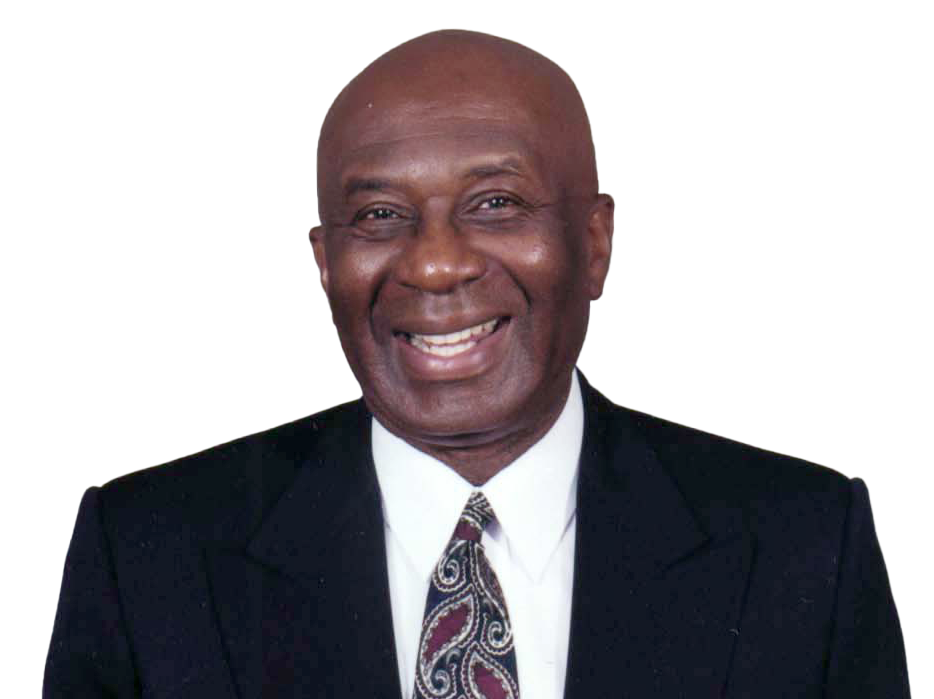
By Major Ben Brooks
Of all the colors in the universe, none has caused more consternation among the psyche of white America, like the term “BLACK.” I recently visited a UPS store, returning merchandise to Staples. When I left the store, I was greeted by a young white male who was wearing a mask. He said, “I support black lives matter.” I thanked him for his support, as I told him it’s a shame that many people don’t understand that philosophy.
Many white Americans often chafe at the mere mention of anything pronounced black, particularly when it refers to incidents involving people of color. This mindset is very troubling because of the lack of information. Dr. Martin Luther King Junior once said: “there are two things in life that are very dangerous, sincere ignorance, and conscientious stupidity.”
Why is it that there is fear when a sign is posted, “black lives matter?” The reply is that “all lives matter.” I agree that all lives matter. Where I part company is recognizing that the opposition to the concept misses the historical significance of the phrase.
As a student of history, there was a time when African-Americans, were considered to be only 3/5 of a person. At that time, we were recognized as the property of a dominating slave master. Consequently, when any act of violence, degradation, disrespect, or dehumanization occurred, it was no big deal.
The slave patrols were a vivid reminder of that concept. They were groups of volunteers who were deputized to locate and return runaway slaves to their masters. At that time, it was a legal process. When the slaves were apprehended, there was systematic flogging, to send a clear message of domination, and to instill fear. It is disheartening to see a similar scenario being played out on the streets of America on a daily basis. The difference between then and now is that the revolution is now being televised.
You have to ask yourself; if, you, as a non-African American, were faced with being hunted and captured like a wild animal and flogged like the slaves endured, how would I handle it? Would you want someone to understand your plight? Would you want a measure of empathy? Would you want to be reminded of your plight, whenever there is an interaction with others who don’t look like you? How comfortable would you be trying to explain your plight to your children? Would they see you as someone who matters? How would you handle the daily bombardment of communication, emphasizing your alleged inferiority position? What would you say to your children about having to attend a separate segregated school in a deprived neighborhood? How would you explain to them the historical perspective of having to drink from a separate water fountain because of the color of your skin? How would you explain to them that you were bussed past a superior school to attend a secondary school system which was inadequately funded?
Additionally, how would you explain to your children the impact of being followed when you enter a HIGH-END store because of your race or gender? As you ponder those questions, are you able to imagine what it might be like as an African-American who is confronted with these issues every day?
Picture yourself on the ground, with an African-American male having you pinned to the pavement, with his knee on your neck, because you had allegedly committed a minor offense. In the process, you are pleading for your life, as other African-Americans are standing around as though they are at a picnic. What is the emotion that you feel, as you imagine this is occurring, and that they have spent eight minutes and 46 seconds holding you down? Is there anger? Is there fear? Is there a feeling of being marginalized, disrespected, devalued, that your life doesn’t matter? Is there an introspective flash of privilege?
Fortunately for you, someone just happened to have a camera and videotaped the whole dilemma. Suppose, at that time, your life was saved, and the people responsible had to be held accountable. With clear visual evidence of your dilemma, how quickly would you want the criminal justice system to begin taking action? Would you be satisfied with the comment, “you know this takes time,” and “we don’t want to rush to judgment?”
As we examine the issue of “black lives matter,” I’m struck by the power of words. I was speaking with my friend, Derrick Pledger, an Economics Instructor at Cuyahoga Community College in University Heights, Ohio, who said, “WORDS create PICTURES, pictures create EMOTION, emotion create ACTION, actions create behavior, and BEHAVIOR creates PHILOSOPHY.”
From the perspective of how America views, “black lives matter,” let me propose a scenario: Think of what happens when you hear the words, “black lives matter.” What picture comes to mind? Is it a group of lawless, out-of-control African-Americans, intent on doing harm to people who do not look like them, or other acts of violence? What has your cultural programming taught you about this group? That’s a question that we all have to ask ourselves as we examine our own psyches.
What is the emotion that you’re feeling as the result of that picture? Is it fear, trepidations, or dehumanization? Is there an empathic feeling of brotherhood, in any sense of the word? If not, why not? Could this be a case of unconscious bias? Could it be a culmination of your total life experience? Have you stopped to examine any of the possibilities, before arriving at your traditional conclusion?
How has what you have seen, and felt, impacts the action that you took? Was your action from a position of comfort, humanization, or acceptance? Is the action that you took, part of your education, training, cultural awareness, or groupthink?
With all of these actions being a part of who you are, how does that impact your behavior? Are all of these factors a total summation of who you are? Will you act in a responsible, lawful, and humane manner with integrity in the future?
As a result of your introspection, did the story that you formed, as a result of your cultural programming, change your philosophy about anything or anyone that is different? Were your actions the result of sincere ignorance, or conscientious stupidity? Are you able to let your conclusions by the result of your own investigations? Are you able to understand that the prevailing wisdom is that “all lives matter,” in a true sense? Are you now better able to understand the plight of those individuals who have been disrespected, marginalized, ignored, dehumanized, and always perceived as less than?
The next time you see a sign that says, “black lives matter,” I hope you will be able see the humanity in the expression.