
It is disheartening to see the phenomenon of hate embraced by so many people who don't understand the origin, meaning, or impact. To grasp the significance, you must first understand what it means. It is an intense, deep-seated emotional response of strong dislike,...
MAJOR BEN’S ARTICLES
Below is a list of articles by Major Ben Brooks that have appeared in the Times Herald.
Daddy, What Time Will You Be Home Tonight?
Every family member asks this question daily. I wonder how many leaders realize the gravity of that question for their officers. When they get up in the morning, they have quiet time with their family before embarking on, hopefully, another routine day at the office....
Leaks
A leak is an unintended hole, crack, or fault that allows a substance- such as a liquid, gas, or light- to escape or enter a container or system. As a child growing up in the rural South, I watched my father build his own home. At that time, he installed a tin roof....
Masks and Officer Safety
As a career law enforcement officer, I am perplexed by the recent debate over officers wearing masks. Everything I learned about law enforcement involved honesty, integrity, and, most of all, transparency. The federal government has a duty to present law enforcement...
Bias Understood
As an international speaker, trainer, and consultant, I have been intrigued by the lack of understanding of various terms, with people using them without knowing their meanings or applications. At one of my National Speakers Association conferences, a presenter shared...
Fear and Bias as a Law Enforcement Blind Spot
Fear – an unpleasant feeling triggered by the perception of danger real or imagined. Origin - past experiences (0-6) History - nomadic days (fight or flight) Survival function - to protect us, triggered by a significant event, i.e., hot, cold, wet, trauma Source: New...
DEI America’s Biggest Blind Spot
In 2016, I took a course with AARP in defensive driving. Having been driving since I was sixteen, I was curious about what the instructor could teach me. I signed up for the course to get a discount on my car insurance. As the instructor went through his orientation,...
DEI, The Latest Bogeyman
DEI is the latest catchphrase that is the catalyst for the present state of the divided states of America. We raise and salute the flag as we recite the Pledge of Allegiance to the United States of America. As patriotic as that sounds, it is far from our day-to-day...
The Reality of Community Policing
Many police executives approached community-oriented policing with a great deal of skepticism because they didn’t realize the critical role that the community plays in their success. Many felt they could do it on their own. Dr. Lee Brown, a former police commissioner...
A Practical Approach to Addressing School Shootings
After Columbine, over four hundred school shootings were reported in America. Every citizen should be outraged that our society has allowed that to happen. Schools should be the safest place in our community for our students, staff, and teachers. It is challenging to...
Minority Recruitment
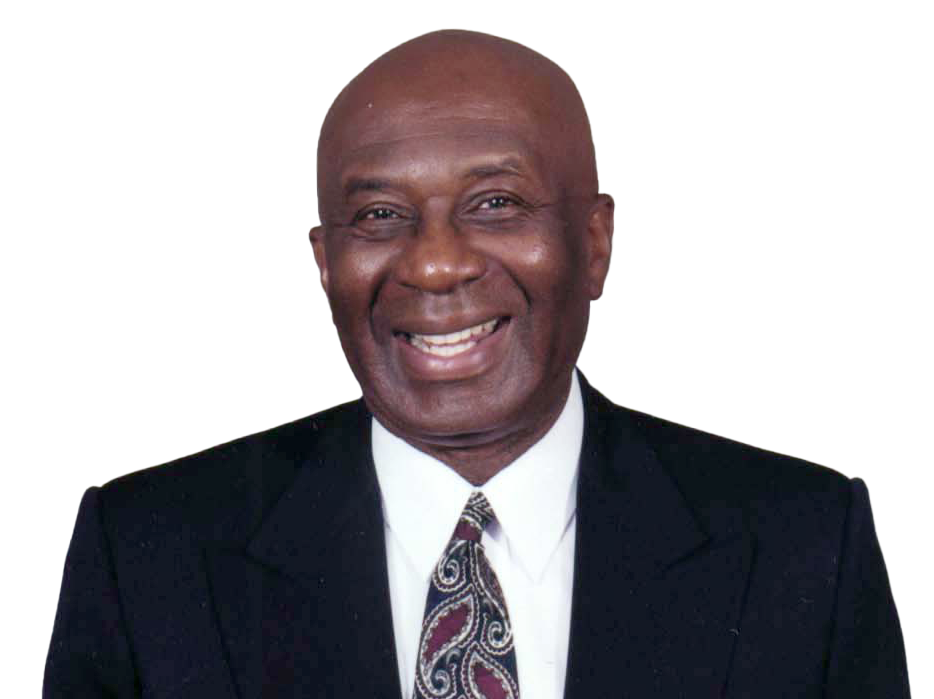
By Major Ben Brooks
Minority recruitment is an ongoing dilemma for law enforcement organizations. It is a challenge because many leaders don’t understand the need to recruit or how to recruit.
It is important to know what recruitment means. Webster defines recruiting as a means of attracting or selecting. Rev. A.R. Bernard, pastor of the Christian Cultural Center in Brooklyn New York, says,” You don’t have to recruit that which you can attract.”
In the law enforcement profession, it is difficult for many leaders to understand the importance of the mechanism for recruiting. Many grew up in the era when those involved in law enforcement recommended their sons, relatives, and other known members of the community who they felt would be a welcome addition to their Police Force. Consequently, they saw no need to recruit. I have witnessed many officers who said, “No one recruited me”, and they were right. Unbeknownst to them there was a systematic recruitment effort taking place because they were recommending those individuals who look like them. This was an organizational in-house recruiting mechanism that ensured a homogeneous work environment.
In today’s multicultural workplace, recruitment takes on a different focus. The National attention focuses on diversity, equity, and inclusion to ensure that the organization represents the community that it serves. To achieve that goal, it is important to have representatives who mirror the customer base they serve. Law enforcement
Law enforcement must understand the nature of the business they are in. When the question is raised what business are you in, the answers are generally, the law enforcement business, protect and serve, public safety. These are tasks performed by law enforcement and not the business that you’re in. As the founder of the National Speakers Association, Cavett Roberts, says we all must understand that we are in the people business.
When organizations can grasp the significance of their business, it becomes easier to understand the connection between recruiting, hiring, and retaining individuals from a multicultural client base to address the needs of the people they serve.
Organizations spend many dollars and hours at various job fairs attempting to land a prize recruit. I am a firm believer that the best recruiting tool for any organization is a satisfied internal customer.
Think of the message that you send when those internal customers file lawsuits for a discriminatory environment. Eliminating the duplicitous message will ensure a positive recruitment effort. It is a concept that I have espoused since my time as an active law enforcement professional. The organization must realize that people will readily join when they feel safe and welcome in a discriminatory-free environment.
As a young African-American growing up in the South, there was no thought of ever being involved in law enforcement. There was nothing that I observed that indicated any desire to have me as a part of their operation.
When I applied to become a member of the Pennsylvania State Police, there were no recruiting overtures for African Americans. I had no concept of what the organization was about the only connection was observing a trooper on a ramp on the Schuylkill Expressway. I was impressed by the uniform, having served three years in the Army as a paratrooper. It was not on my radar to consider the state police. I was clueless about the organization, as I saw no one look like me. This is an important observation particularly when you are considering those individuals who are different from you.
Organizations must understand when you’re recruiting minorities or other people of color, it is important to have representatives who look like them. This presents a measure of comfort in considering your organization. My application to enlist in the Pennsylvania State Police was easy because I had my childhood friend Richard McDowell coming in with me. At least there was one person with whom I could identify. We had no idea that there were no African Americans on the force at the time. I must confess that if I had applied alone and realized there were no African Americans on the force, I would not have applied.
If you desire to employ African Americans are other people of color you must create a welcoming environment where the individuals can feel psychologically safe.
When you build a welcoming diverse organization, people will want to be an integral part of it. The choice is up to you