
It is disheartening to see the phenomenon of hate embraced by so many people who don't understand the origin, meaning, or impact. To grasp the significance, you must first understand what it means. It is an intense, deep-seated emotional response of strong dislike,...
MAJOR BEN’S ARTICLES
Below is a list of articles by Major Ben Brooks that have appeared in the Times Herald.
Daddy, What Time Will You Be Home Tonight?
Every family member asks this question daily. I wonder how many leaders realize the gravity of that question for their officers. When they get up in the morning, they have quiet time with their family before embarking on, hopefully, another routine day at the office....
Leaks
A leak is an unintended hole, crack, or fault that allows a substance- such as a liquid, gas, or light- to escape or enter a container or system. As a child growing up in the rural South, I watched my father build his own home. At that time, he installed a tin roof....
Masks and Officer Safety
As a career law enforcement officer, I am perplexed by the recent debate over officers wearing masks. Everything I learned about law enforcement involved honesty, integrity, and, most of all, transparency. The federal government has a duty to present law enforcement...
Bias Understood
As an international speaker, trainer, and consultant, I have been intrigued by the lack of understanding of various terms, with people using them without knowing their meanings or applications. At one of my National Speakers Association conferences, a presenter shared...
Fear and Bias as a Law Enforcement Blind Spot
Fear – an unpleasant feeling triggered by the perception of danger real or imagined. Origin - past experiences (0-6) History - nomadic days (fight or flight) Survival function - to protect us, triggered by a significant event, i.e., hot, cold, wet, trauma Source: New...
DEI America’s Biggest Blind Spot
In 2016, I took a course with AARP in defensive driving. Having been driving since I was sixteen, I was curious about what the instructor could teach me. I signed up for the course to get a discount on my car insurance. As the instructor went through his orientation,...
DEI, The Latest Bogeyman
DEI is the latest catchphrase that is the catalyst for the present state of the divided states of America. We raise and salute the flag as we recite the Pledge of Allegiance to the United States of America. As patriotic as that sounds, it is far from our day-to-day...
The Reality of Community Policing
Many police executives approached community-oriented policing with a great deal of skepticism because they didn’t realize the critical role that the community plays in their success. Many felt they could do it on their own. Dr. Lee Brown, a former police commissioner...
A Practical Approach to Addressing School Shootings
After Columbine, over four hundred school shootings were reported in America. Every citizen should be outraged that our society has allowed that to happen. Schools should be the safest place in our community for our students, staff, and teachers. It is challenging to...
Racial Ingratiation
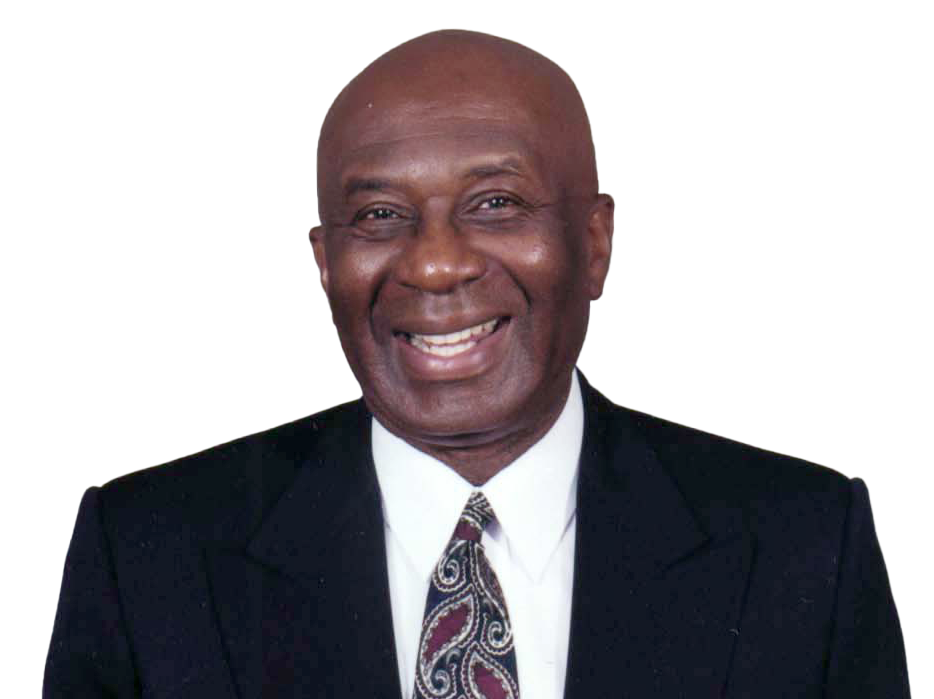
By Major Ben Brooks
In the post-Jim Crow era, the powerless experienced a measure of power and control. They believed that justice and fair play were attainable. However, some of those who have enjoyed a lifetime of privilege, are experiencing perceived disparities and hereto for unheard measures of accountability. As a result, there are attempts at virtue signaling, or ingratiation in an attempt to mitigate their dilemma.
Growing up in the segregated South, I had a firsthand look at disparities, particularly in the criminal justice system. It was always disconcerting to witness people of color being murdered or lynched with impunity. In the Jim Crow era, this was looked upon as business as usual. It is disconcerting when I hear political figures espousing the notion that the system is broken, rigged, or two-tiered. During that period those in power had no problem with the system. The people who were victims of the broken, rigged two-tiered system could only wish or hope for redemption. They had no access to positions of power.
This is particularly evident in attempts for politicians to ingratiate themselves to an important constituency in an attempt to gain political leverage. It is galling to witness the hypocrisy. Where was the concern when the authority and power were not challenged? Trying to convince people to identify with them with jargon or virtue signaling flies in the face of credulity. The most effective method of ingratiation is exercising honesty over mendacity.
A recurring example of ingratiation was when a friend said to me, “When I see you, I don’t see color.” My rejoinder was, I think you meant to say that my color doesn’t matter. It was a teaching moment to set the record straight. That kind of statement has intended as well as unintended consequences.
The intended consequence is an example of racial ingratiation. It was an attempt to try to convince me that they were on my side. The unintended consequence is to render me invisible which means there is no reason to see me in my humanity nor any responsibility to respond to me positively.
The surest way to ingratiate yourself to others is to be honest and straightforward based on performance or behavior as opposed to a characteristic. Stereotypical tropes are demeaning and disingenuous ways of ingratiation.