
It is disheartening to see the phenomenon of hate embraced by so many people who don't understand the origin, meaning, or impact. To grasp the significance, you must first understand what it means. It is an intense, deep-seated emotional response of strong dislike,...
MAJOR BEN’S ARTICLES
Below is a list of articles by Major Ben Brooks that have appeared in the Times Herald.
Daddy, What Time Will You Be Home Tonight?
Every family member asks this question daily. I wonder how many leaders realize the gravity of that question for their officers. When they get up in the morning, they have quiet time with their family before embarking on, hopefully, another routine day at the office....
Leaks
A leak is an unintended hole, crack, or fault that allows a substance- such as a liquid, gas, or light- to escape or enter a container or system. As a child growing up in the rural South, I watched my father build his own home. At that time, he installed a tin roof....
Masks and Officer Safety
As a career law enforcement officer, I am perplexed by the recent debate over officers wearing masks. Everything I learned about law enforcement involved honesty, integrity, and, most of all, transparency. The federal government has a duty to present law enforcement...
Bias Understood
As an international speaker, trainer, and consultant, I have been intrigued by the lack of understanding of various terms, with people using them without knowing their meanings or applications. At one of my National Speakers Association conferences, a presenter shared...
Fear and Bias as a Law Enforcement Blind Spot
Fear – an unpleasant feeling triggered by the perception of danger real or imagined. Origin - past experiences (0-6) History - nomadic days (fight or flight) Survival function - to protect us, triggered by a significant event, i.e., hot, cold, wet, trauma Source: New...
DEI America’s Biggest Blind Spot
In 2016, I took a course with AARP in defensive driving. Having been driving since I was sixteen, I was curious about what the instructor could teach me. I signed up for the course to get a discount on my car insurance. As the instructor went through his orientation,...
DEI, The Latest Bogeyman
DEI is the latest catchphrase that is the catalyst for the present state of the divided states of America. We raise and salute the flag as we recite the Pledge of Allegiance to the United States of America. As patriotic as that sounds, it is far from our day-to-day...
The Reality of Community Policing
Many police executives approached community-oriented policing with a great deal of skepticism because they didn’t realize the critical role that the community plays in their success. Many felt they could do it on their own. Dr. Lee Brown, a former police commissioner...
A Practical Approach to Addressing School Shootings
After Columbine, over four hundred school shootings were reported in America. Every citizen should be outraged that our society has allowed that to happen. Schools should be the safest place in our community for our students, staff, and teachers. It is challenging to...
What It’s Like To Be A First
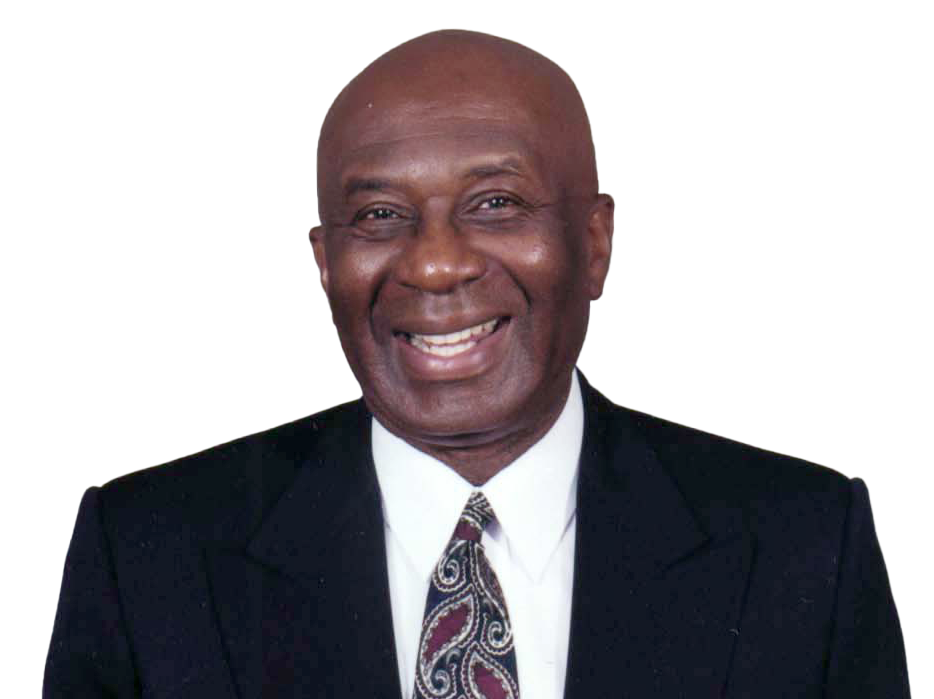
By Major Ben Brooks
Being the first at anything is challenging and problematic. There is no playbook or established strategy for how to chart a life’s course.
I was the first of seven siblings. It was difficult to know or understand the significance of my position. As the other six arrived, I began to recognize my role in helping my parents care for them. It was an awesome experience, even though I didn’t recognize the importance at the time. They looked to me for guidance as they explored life.
Those early experiences were a precursor for my life’s journey. I thank my parents for the guidance and wisdom they shared during that part of my journey. It was very helpful in shaping my perspective on life.
After high school, I enlisted in the U.S. Army, where I became a paratrooper with the 101st Airborne Division at Fort Campbell, Kentucky. I had the experience of making a parachute jump on my first plane ride. What an experience.
Being the first of my family to join the military set the stage for my brother Thomas to enlist. One never knows the impact of what you do. It was a surprise when I heard him say that I was his role model. That revelation touched me. I never realized the impact that I had on him. You never know the impact you have on others who follow you.
Having spent 3 ½ years in the military, I enlisted in the Pennsylvania State Police as one of the first African Americans to join. Ironically, I was joined by my long-time pal, Richard McDowell Junior. We had no idea that we were the first to enlist in that job. However, I quickly recognized that we were trailblazers.
The role of a trailblazer is significant because there are high expectations of your success as a role model. You are impacted by the presence of biases. Biases impact how you are viewed. For every bias, there is a story that guides the decision about you. The decisions impact behavior, which determines the actions that impact you. The key is to ensure that your behavior does not match the story or prevailing perception.
Not having predecessors forced me to chart a positive course that others would be able to emulate. Three concepts govern the journey as a first: job, issue, and process. Knowing the job extraordinarily well so no one can question your ability. Knowing the issues. The issues are things that govern how you navigate in your new positions. That includes understanding the mission, vision, and values of the organization. The last issue is knowing the process. The process is how your experiences determine your longevity in the organization. Over the years, I experienced many leaders who were not aware of those three concepts, much to their regret.
A trailblazer has a proverbial baton that is carried in the race of life. It is passed on to those who are prepared to continue and further the mission. As the oldest and the only surviving African-American trailblazer of the Pennsylvania State Police, I offer this advice to those who follow: Understand the three principles, JOB, ISSUE, and PROCESS. It will serve you well as you advance in your career. Even though I did not have predecessors, I recognized that I created a baton. By understanding the principles of job, issue, and process, I am in a position to pass the baton to those who are willing to accept the responsibility of impacting others.